the axe
The axe appears in the story only during the climactic final night, when it becomes the instrument of forcible entry into the cabinet. Its sudden materialization transforms the mystery of Dr. Jekyll's sealed room into a physical assault, and the blows it delivers shatter not only the door but the last barrier between the characters and the truth.
Discovery and Purpose
Poole, the butler, retrieves the axe from the surgical theatre, where it had been stored under a stack of packing straw. He announces its availability to Mr. Utterson with the words, "There is an axe in the theatre," and proposes that the lawyer take the kitchen poker for himself. The axe is thus presented as a crude but decisive instrument, chosen for its raw force rather than any surgical precision. Its presence in the theatre—a space once crowded with medical students, now gaunt and silent—links the coming violence to the building's history of dissection and transformation.
The Breaking of the Door
Poole swings the axe over his shoulder and delivers the first blow, which shakes the entire building and causes the red baize door to leap against its lock and hinges. From inside the cabinet comes a dismal screech, "as of mere animal terror." The axe rises again and again; the panels crash and the frame bounds. Four blows fall, but the wood is tough and the fittings are of excellent workmanship. It is only on the fifth blow that the lock bursts and the wreck of the door falls inward onto the carpet. The repeated, violent strokes of the axe mark the transition from patient investigation to desperate action, and the sound of the blows—heard by the terrified servants huddled in the hall—becomes the audible signature of the story's crisis.
Aftermath and Significance
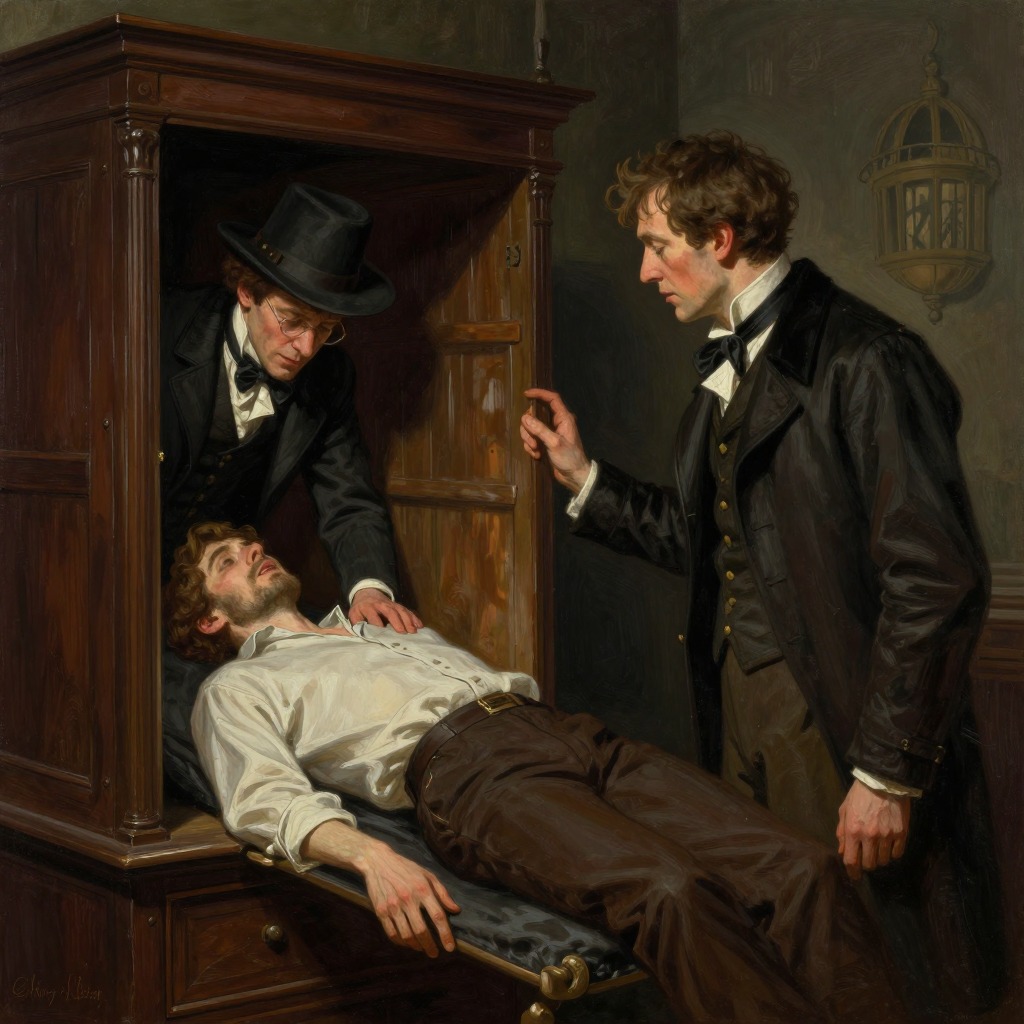
Once the door is down, the axe is not mentioned again. Its work is complete. The two men peer into the cabinet and find the body of Edward Hyde, still twitching, dressed in clothes far too large for him, with a crushed phial in his hand and the strong smell of kernels in the air. The axe, as a tool of forced entry, has no further role; but its five blows have accomplished what weeks of locked doors, evasive notes, and unanswered questions could not. The axe is the object that ends the period of concealment and compels the final revelation, making it a symbol of the violent rupture between Jekyll's hidden life and the world that sought to understand it.